So what is it that you do?
CAMERA TRAPPING, DNA, & STATISTICS
Vertical Divider
|
LANDSCAPE ECOLOGY AND RESTORATION
Vertical Divider
|
MOUNTAIN BIODIVERSITY
Vertical Divider
|
SPECIES RESTORATION
Vertical Divider
|
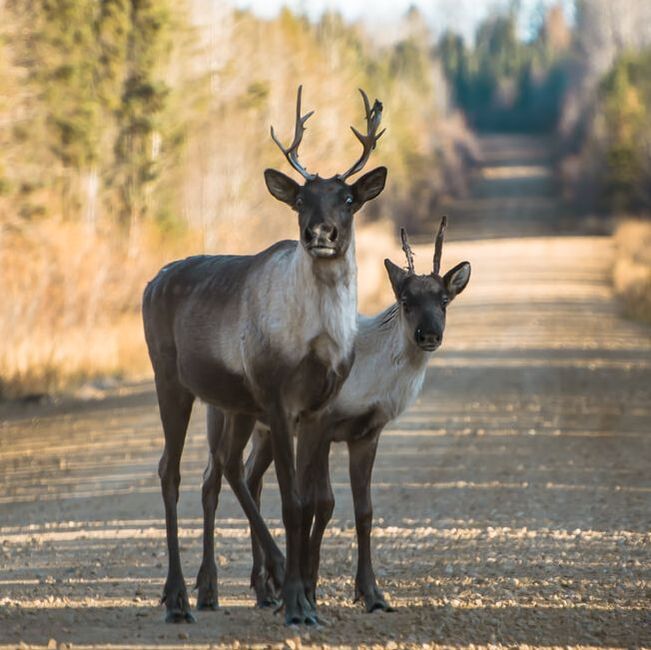
UNGULATE MACROECOLOGY
Vertical Divider
|
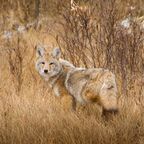
CARNIVORE MACROECOLOGY
Vertical Divider
|
SPECIES' PERSISTENCE IN COMPLEX MULTI-USE LANDSCAPES
Vertical Divider
|
Where animals live, why they live there, and how humans change that.
THE Landscape Ecology OF MAMMAL CONSERVATIONIn the ecological theatre and evolutionary play, landscapes are the stage. All species must navigate time and space to find resources, avoid predators, outwit competitors, and find mates. How all of these pieces spatially connect is a primary driver influencing species' success. As we extract resources we change the settings on this stage, thus changing the play.
ACME Lab's core research goal is to understand how and why landscape change affects species, and how we can conserve and restore landscapes to maintain ecological processes and landscape function. Our research spans multiple landscapes across western Canada and beyond. |
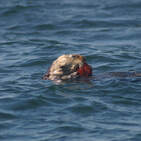
Species Restoration
|
UNGULATE MACROECOLOGYUngulates are mass drivers of change in ecological systems. They have substantial impacts on vegetation communities, and limit (or bolster) carnivore populations: they are the fulcrum in the predator-prey 'trophic cascade' teeter-totter.
Ungulate populations have changed on continental scales over the last century, and these changes are manifesting in real-time in Canadian landscapes. Some species such as white-tailed deer are doing very well: too well. Others, such as moose and alpine ungulates, are faring more poorly. From arctic muskox and divvi, mountain moose and sheep, invading white-tailed deer in the boreal forest, to urban black-tailed deer, we examine how landscape and climate change affect populations and distributions. |
Carnivore MacroecologyCarnivores range vast distances, so they often suffer the greatest impacts from landscape development. Carnivores and development can coexist, but in most landscapes we lack the ecological knowledge to make good decisions to make coexistence a reality.
ACME Lab researches apex carnivores (wolves), meso-carnivores (marten, fishers, foxes), omnivores (black and brown bears), and the mighty wolverine. We examine how these species share landscapes with each other and their prey, and respond to human-induced changes to landscape and climate. |
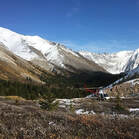
Mountain Biodiversity
|
Species' Persistence in Complex Multi-Use LandscapesMany landscapes are complex patchworks of natural landscape features, forests, and anthropogenic development such as oil and gas extraction, roads, forest cut blocks, mining, and recreation. Yet mammal populations, with some exceptions, persist in these landscapes. How do they do it? How does landscape complexity relate to wildlife distribution?
We research the population and distribution of species ranging from white-tailed deer to fishers, and relate to landscapes with complex hierarchical models. This allows us to pinpoint the best predictors of species occurrence, so we can test ecological mechanisms and identify priority features for management. Though applied, our research is embedded heavily in niche theory and competition theory and seeks to advance these fields. |
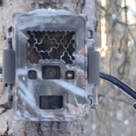
Camera Trapping, DNA, & Statistics
|